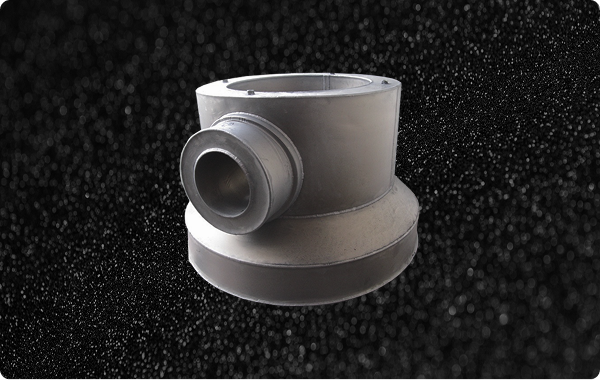
Hot Isostatic Pressing (HIP)

Hot Isostatic Pressing (HIP) is an advanced manufacturing process that dramatically improves material integrity and performance by applying simultaneous high temperature and uniform high pressure to parts in all directions. This process eliminates internal porosity, increases density, and enhances mechanical properties like fatigue strength, toughness, and dimensional stability, making it ideal for mission-critical components across industries.

Overview

HIP involves placing a component, often made by powder metallurgy or casting, into a sealed pressure vessel and exposing it to high temperature and inert gas pressure (typically argon) from all directions. This isostatic approach ensures uniform densification, reducing defects and strengthening materials throughout the part.

Benefits of using HIP

Near-theoretical density

Achieves densities well above conventional methods, often up to 99.998%, resulting in superior mechanical performance.

Elimination of internal porosity & defects

Voids, microshrinkage, and entrapped gas pockets are closed, leading to improved fatigue life and reliability.

Uniform mechanical properties

Isostatic pressure ensures isotropic microstructure and strength throughout the component.


Complex near-net-shape parts

Reduces machining and material waste by enabling production of geometrically complex components.

Improved performance in demanding environments

Enhanced fracture toughness and workability make parts suitable for high-stress applications.

Enhanced material reliability

Results in fewer quality assurance issues and longer in-service life.

Applications Across Industries

Hot Isostatic Pressing plays a key role in modern manufacturing where performance and safety are paramount.

Technical Details

If you’re considering HIP for a project, our team can help you evaluate the technical processes and design elements to see if it’s a good fit.

CategoryConsiderationImpact
TemperatureTypically 800°C–1350°C+ depending on alloyMust align with material diffusion and creep properties
PressureCommonly 100–200 MPa (15,000–30,000 psi)Drives pore closure and densification
AtmosphereInert gas (usually argon)Prevents oxidation and chemical contamination
Cycle TimeSeveral hours at peak temp/pressureInfluences microstructure and final properties
Material TypeSuperalloys, titanium, stainless steels, tool steels, ceramicsEach responds differently to diffusion bonding and densification
Part GeometryComplex shapes supported; size limited by vessel capacityDesign must account for uniform heat transfer
Encapsulation (Canning)Required for loose powder or certain PM buildsEnsures full density and shape retention

The Synertech Approach to HIP

At Synertech PM, HIP isn’t just another process. It’s a core capability that delivers precision, performance, and consistency for your most demanding components. 

Synertech leverages advanced HIP technology to produce near-net-shape and complex parts with up to 99.998% relative density, ensuring mechanical properties that meet or exceed customer specifications.

Why Manufacturers Choose Synertech

Contact Our Team

If you want to harness the full potential of Hot Isostatic Pressing for your toughest engineering challenges, speak to an engineer today. We can help optimize your design, enhance your materials, and exceed performance expectations.