
Powder Blending
Overview
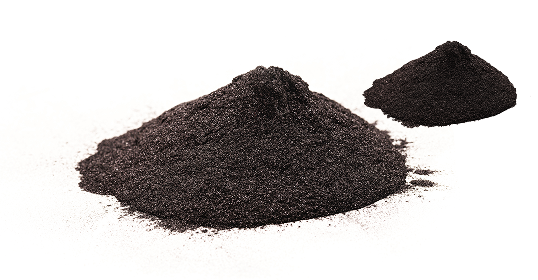
Powder blending is the foundational step in powder metallurgy manufacturing, where carefully selected metal powders, alloying elements, lubricants, and additives are mixed to create a uniform material composition before compaction and sintering.
At Synertech PM, powder blending is treated as a precision-controlled engineering process, not simply a mixing step. By carefully controlling particle distribution, additive ratios, and blending dynamics, Synertech ensures that the resulting powder mixture provides the consistency, performance, and reliability required for high-performance powder metal components.
Key Benefits of Powder Blending
Consistent material composition
Thorough mixing ensures every portion of the powder contains the same alloy composition, producing predictable mechanical properties in the final part.
Improved material performance
Blending allows engineers to incorporate alloying elements, lubricants, and binders that enhance properties such as hardness, ductility, density, and wear resistance.
Optimized powder flow and compaction
Lubricants and additives reduce die friction and improve powder flow during pressing operations, enabling more efficient compaction and improved part quality.
Custom alloy developments
Powder blending enables the creation of specialized material systems that may not be achievable through traditional alloy manufacturing methods.
Uniform density during pressing
Consistent powder mixtures help produce uniform green density, improving dimensional control and minimizing defects during sintering.
Reduced defects and material segregation
Proper blending prevents particle separation, clumping, and inconsistent additive distribution that can lead to weak areas in the final component.
Material efficiency and sustainability
Powder metallurgy processes utilize over 95% of raw materials, reducing waste compared with many traditional metalworking processes.
Applications Across Industries
Powder blending enables the production of tailored metal compositions for a wide range of high-performance components.
- Structural aerospace components
- High-temperature alloy systems
- Mission-critical mechanical assemblies
Aerospace & Defense
- Gears, bearings, and bushings
- Structural PM components
- High-volume wear-resistant parts
Automotive & Transportation
- Valve and pump components
- Drilling equipment parts
- Corrosion-resistant alloy systems
Energy & Oil & Gas
- Power tool components
- Mechanical assemblies
- Wear-resistant tooling
Industrial Equipment
- Feedstock for HIP and CIP processes
- Custom alloy systems
- Hybrid manufacturing applications
Advanced Manufacturing
Technical Details
Proper powder blending directly influences downstream manufacturing steps and plays a critical role in ensuring part performance, dimensional accuracy, and material integrity.
When specifying powder blending for a powder metallurgy project, engineers should consider the following factors:
| Category | Consideration | Engineering Impact |
|---|---|---|
| Powder Composition | Selection of base metals and alloying elements | Determines final mechanical properties and performance |
| Particle Size Distribution | Control of powder granularity and particle shape | Influences packing density and compaction behavior |
| Additives & Lubricants | Materials such as zinc stearate or binders | Improve powder flow, reduce die friction, and aid compaction |
| Mixing Equipment | Multi-axis rotating drums, internal baffles, and mixing blades | Ensures homogeneous distribution of materials within the powder batch |
| Blending Time | Controlled mixing cycles | Prevents segregation while achieving uniform composition |
| Powder Flow Characteristics | Flowability and packing properties | Critical for consistent die filling and compaction |
| Contamination Control | Clean processing environments and sealed blending systems | Prevents foreign particles from affecting material performance |
| Integration with PM Processes | Compatibility with CIP, HIP, and sintering | Ensures consistent densification and final properties |
| Material Homogeneity Verification | Sampling and material analysis | Confirms uniform distribution of additives and alloy elements |
The Synertech Approach
Synertech PM’s powder metallurgy expertise allows engineers to develop precisely blended powder systems that support complex geometries, advanced material properties, and mission-critical applications.
Why Synertech Stands Out

Integrated Manufacturing Expertise
Synertech integrates powder blending with advanced manufacturing processes like CIP, HIP, and machining. This ensures consistent quality and control across the entire production process.

Advanced Materials Expertise
Our team works with a wide range of metals and alloys, including stainless steel, copper, bronze, and iron, to engineer materials that meet demanding application requirements.

Made in the USA
Domestic manufacturing ensures reliable supply chains, quality assurance, and dependable delivery for critical aerospace, defense, and industrial programs.
Get great powdered metal parts built to spec—no matter how complex the design.
Partner with Synertech PM.